Why I made it
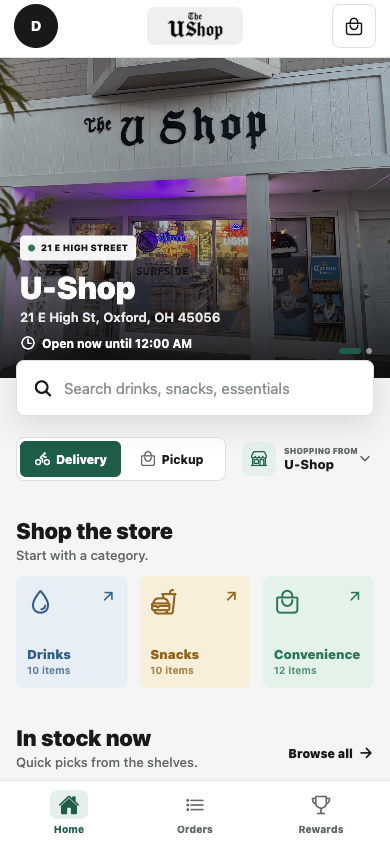
U-Shop is a pre-release ordering app I built with AI coding assistance for three convenience stores near Miami University. The project pairs a shopper app with staff tools, including a workflow for turning messy catalog records into products the store can review. It was one of my senior projects and has not launched.
I was a regular at U-Shop, a convenience store near Miami University, and got to know Rex, the owner. In November 2024, knowing I was learning to build apps, he offered to pay me to make one for his stores on a handshake deal. I took it on, and it also became one of my senior projects.
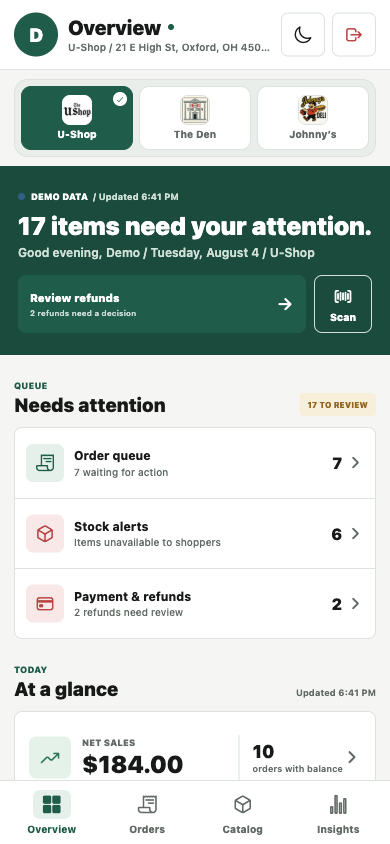
Rex owned three stores: U-Shop, Johnny's and the Den. He wanted one system for inventory across all three, a rewards program, and eventually delivery, so I built maps and delivery tracking into the app too.
This was before AI agents. I used Cursor to write files, but I had to understand how the whole product fit together myself: Firebase and later Supabase, Expo Go for testing on my phone, Xcode and the Apple Developer Program. I kept documentation of the file tree and left plain-English comments in every file, so anyone could follow how it worked without reading the code line by line.
The project paused before launch and did not reach the App Store. It became a senior-project learning experience in requirements, catalog preparation, and coordinating the pieces of a complete product.
The choices behind it
01
Two apps for two jobs
A shopper should be thinking about their order. A staff member needs to change stock, manage prices and fulfill it. Separating those workflows also keeps internal controls out of the customer app.
02
Clarifying the workflow
The initial idea left important workflow decisions open. Through conversations with the owner and successive demos, I worked to clarify what shoppers and staff needed. The lesson was to agree on requirements and acceptance criteria early, then use them to evaluate changes.
03
Product data was the real cost
Preparing the catalog meant matching point-of-sale product records to names and images. External data sources introduced costs beyond building the interface. That made data coverage, budget, and ownership decisions part of the product scope.
04
Keep a duplicate separate from a disagreement
Two identical records can become one product, but two prices for the same store SKU need a decision. The catalog preparation workflow keeps the original rows, merges equivalent copies, and sends conflicts to a separate review output. It also treats the same SKU in different stores as separate products.
05
Preparing data is not approving it for sale
A clean-looking spreadsheet can still contain uncertain stock, price or product identity. Prepared records retain their source information and remain unavailable for purchase. For example, negative stock is preserved for review while the prepared quantity stays unknown, rather than turning an unreliable value into sellable inventory.
What’s inside
Shopping app
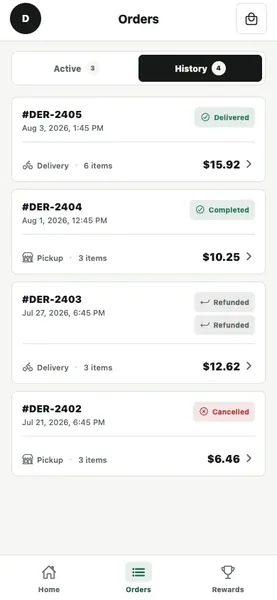
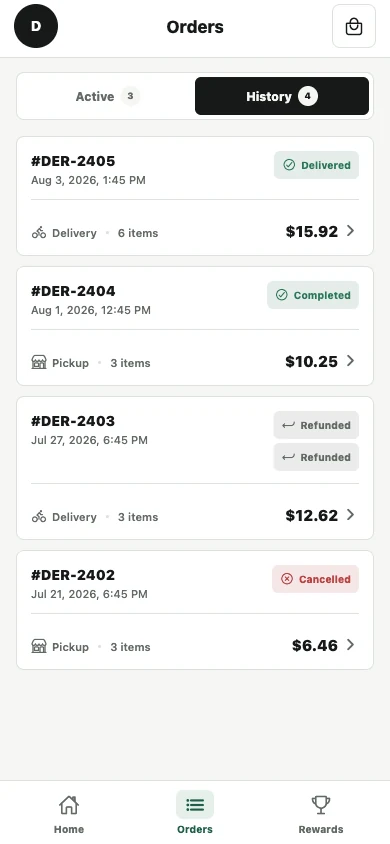
Browse the store, build a cart, pick pickup or delivery, and earn rewards.
Staff app
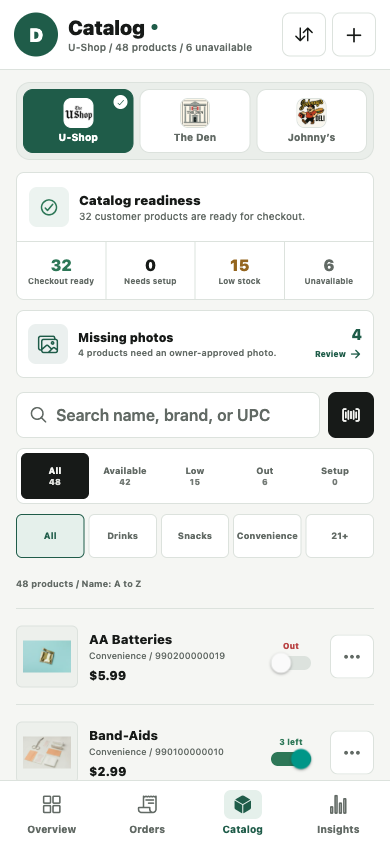
Update stock and prices, scan barcodes, and work through orders and refunds.
Prices set by the server
Checkout calculates totals from server-side product prices rather than accepting a total supplied by the phone.
Catalog review
Catalog preparation merges equivalent duplicate rows, separates conflicts for review, and keeps prepared items unavailable for purchase.
Progress
- Nov 2024The idea
Rex asked me to build an app for his stores.
- Jan–May 2025First version of the app
Built the shopper app in Expo and React Native as one of my senior projects.
- Nov 2025Sign-in, maps and dark mode
Added Google sign-in, SMS verification, Google Maps and a big round of UI cleanup.
- Jul 2026New backend and owner demo build
Moved the app onto Supabase with Stripe checkout and put together a build for the owner to try on TestFlight.
- Aug 2026Catalog cleanup and staff app
Reconciled the store's full product spreadsheet and split out an internal Android app for staff.
- NowPaused before launch
Paused before live payments and App Store release. The shopper and staff apps remain available as a working demo.
Known gaps
Pre-release: catalog approval, production-service setup and device acceptance remain open. The downloadable work sample documents the checks performed on the catalog preparation workflow.