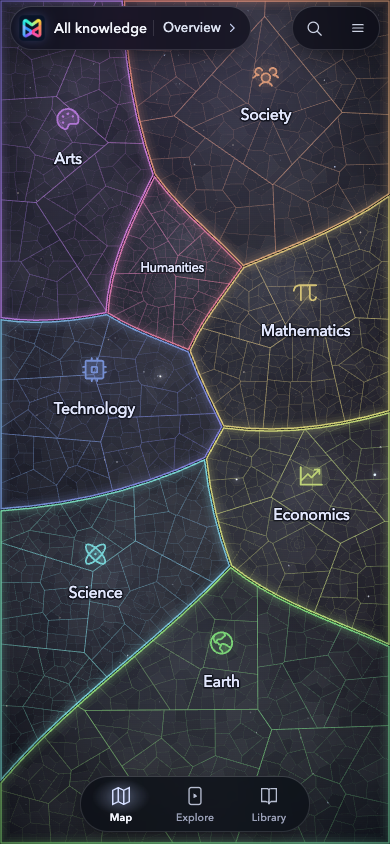
The atlas
All of knowledge as eight territories on one map.
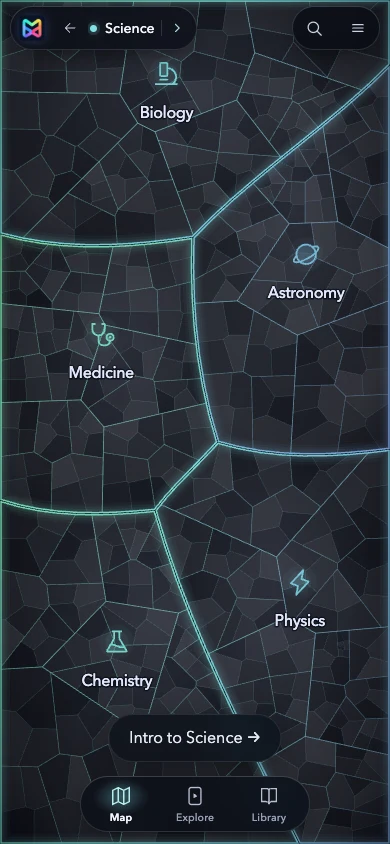
Zoom in
Every region opens into its own map of subjects.
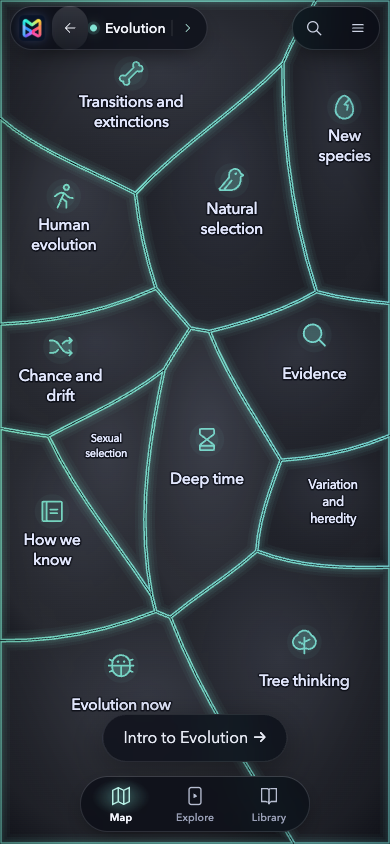
Keep going
Zoom again and Evolution splits into its own topics, from deep time to natural selection.
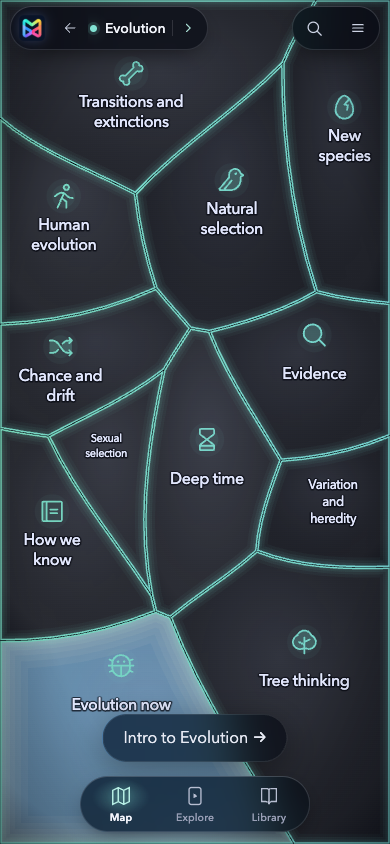
Earn the map
Finish a discovery and its territory lights up.
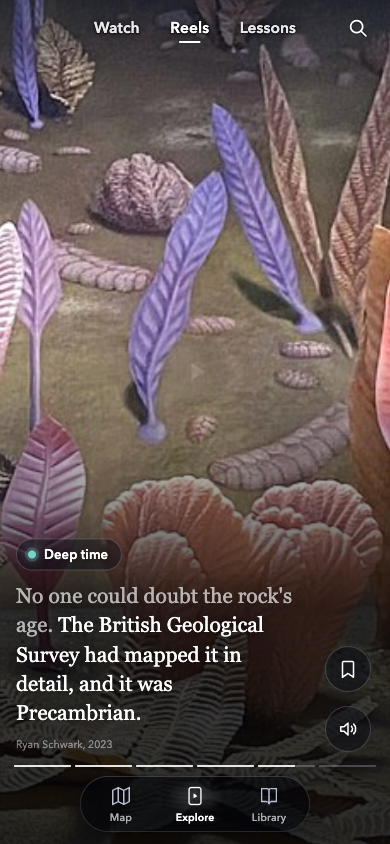
Reels
Short videos for when you'd rather watch than read.
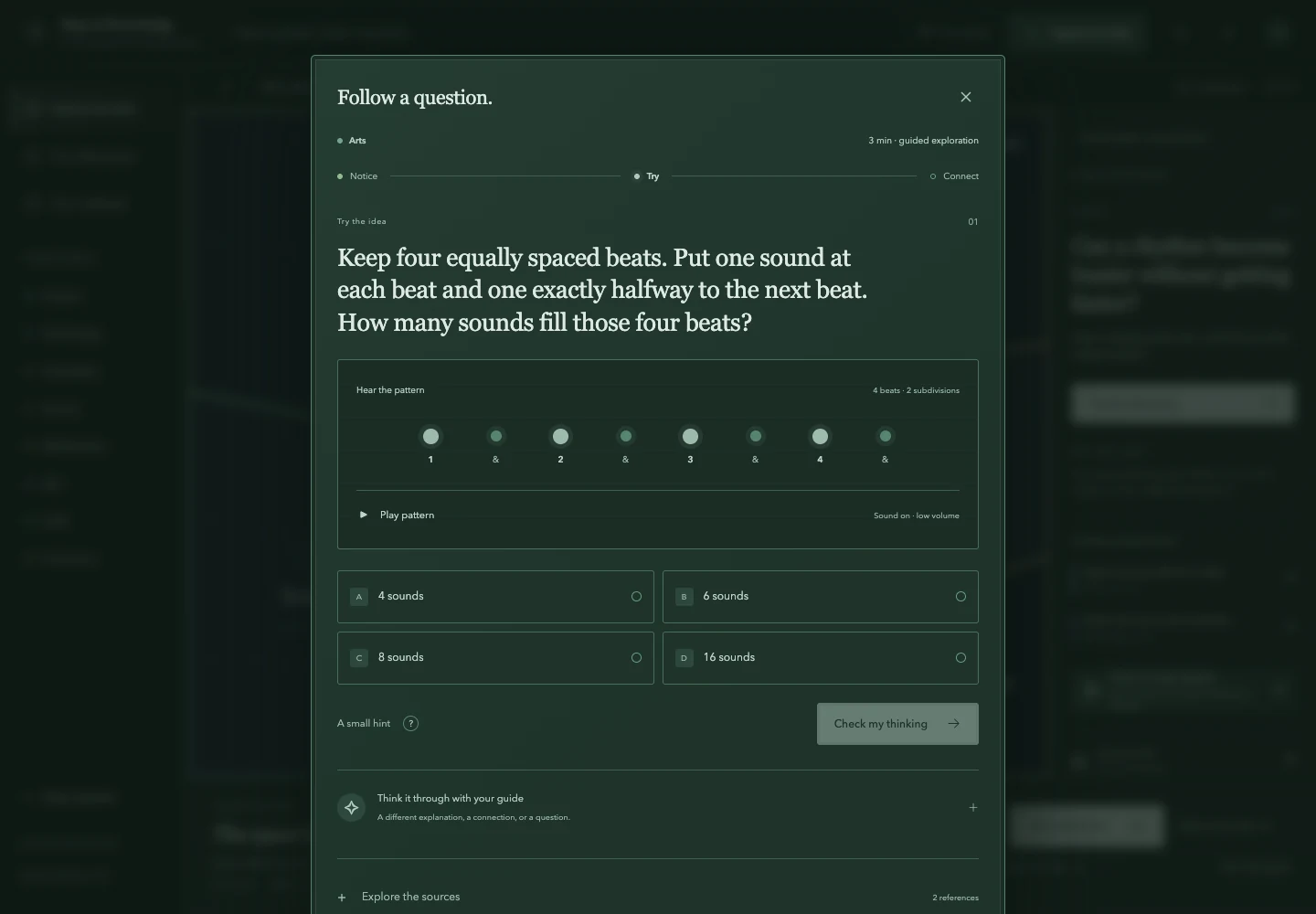
Try a discovery
Hands-on experiments. This one splits a beat into equal parts.
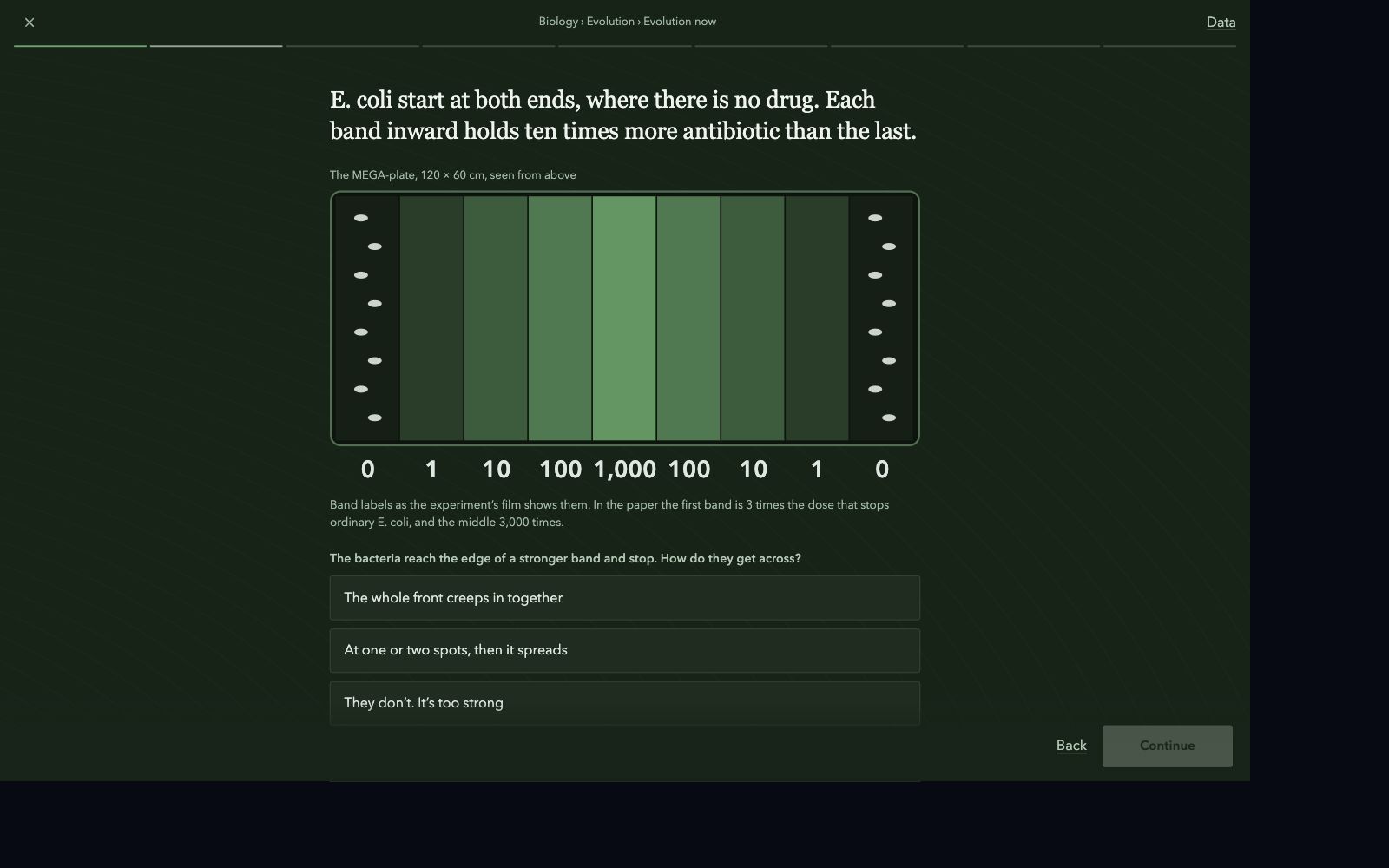
Make a prediction
Guess what happens before you see the answer.
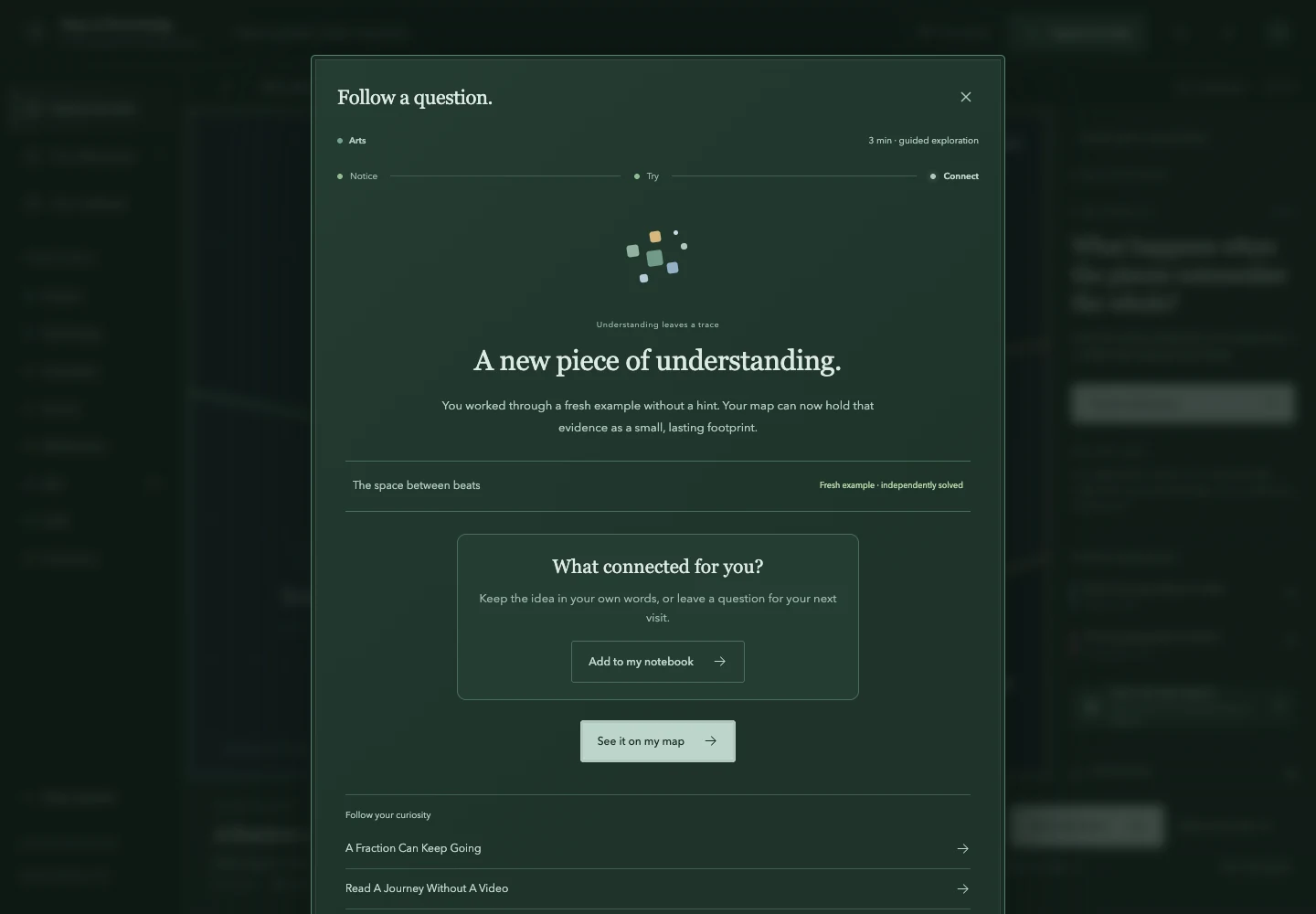
Prove it
A topic only counts once you get a fresh example right on your own.
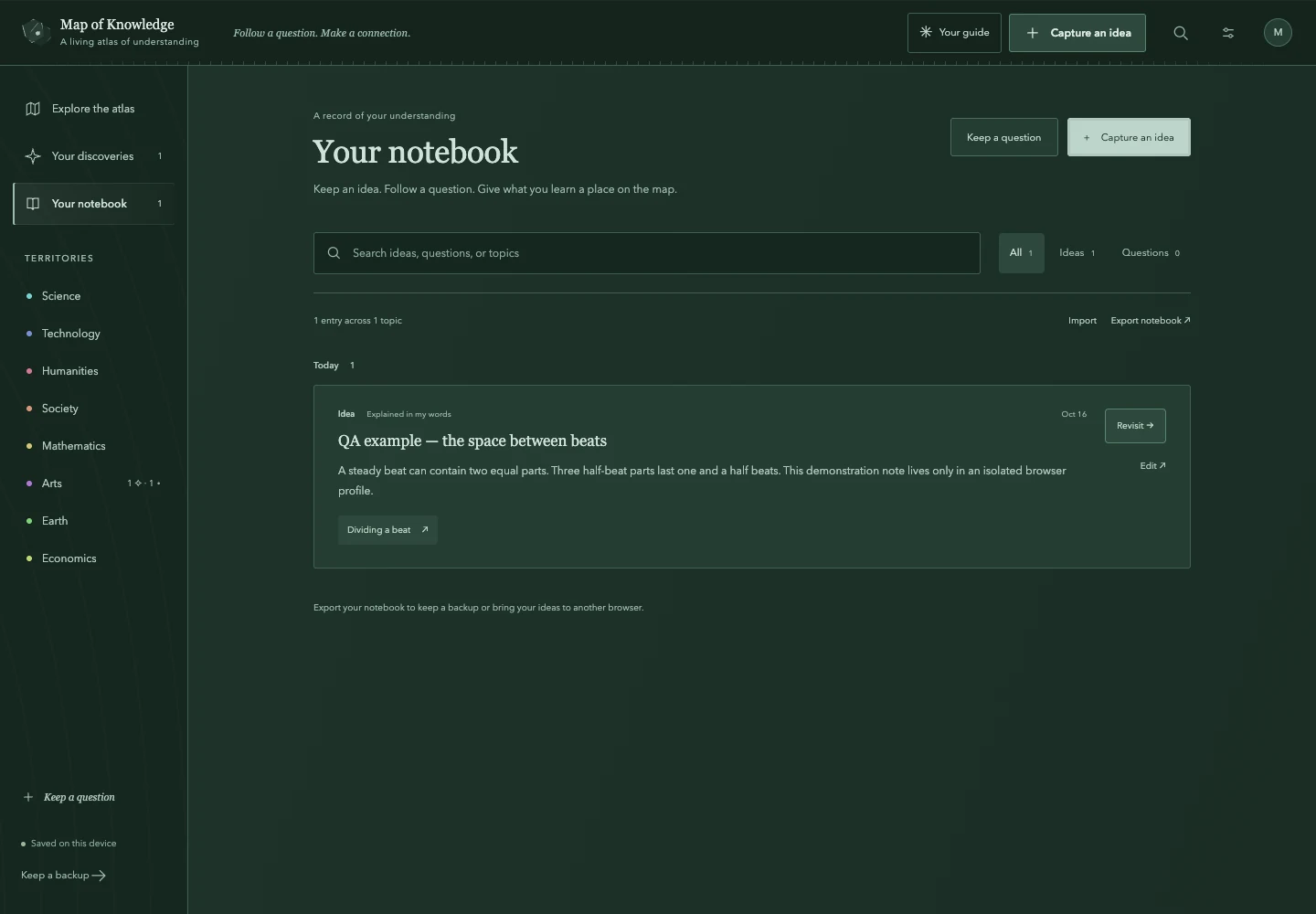
Keep a takeaway
Save what you learned to your notebook and come back to it.
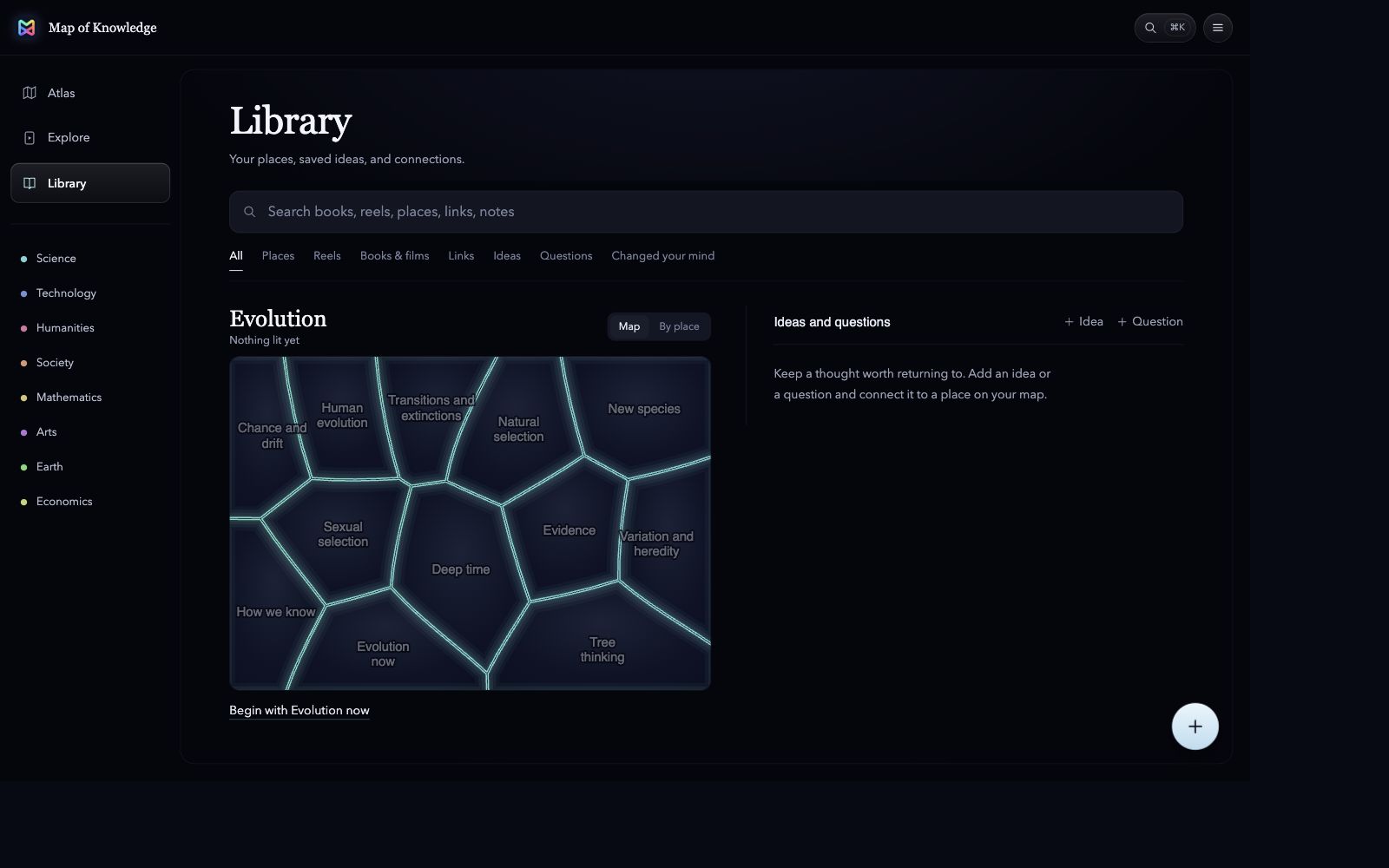
Your library
Saved videos and lessons, organized by where they sit on the map.
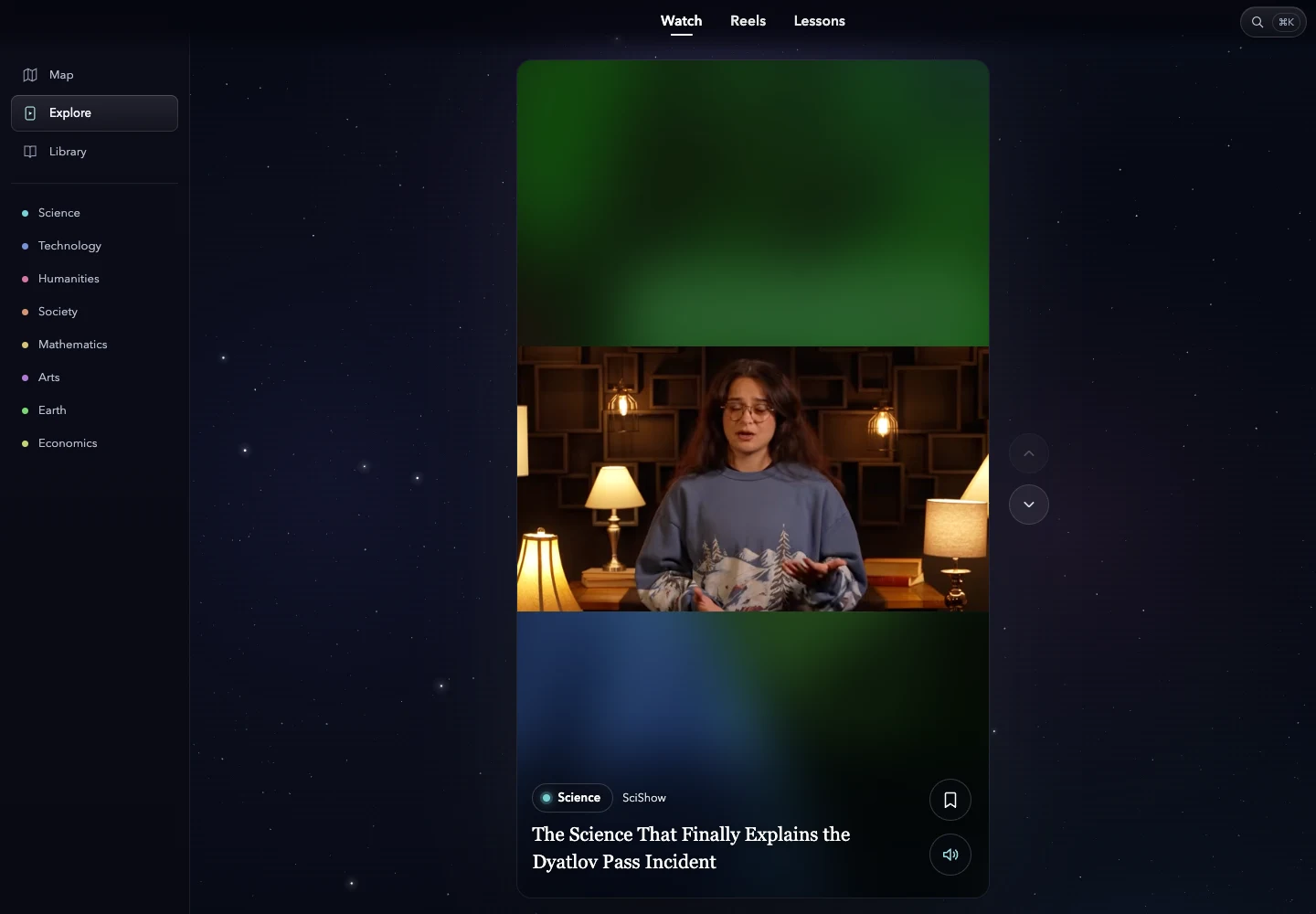
Watch and explore
Videos tied to a spot on the map, so watching still counts as exploring.
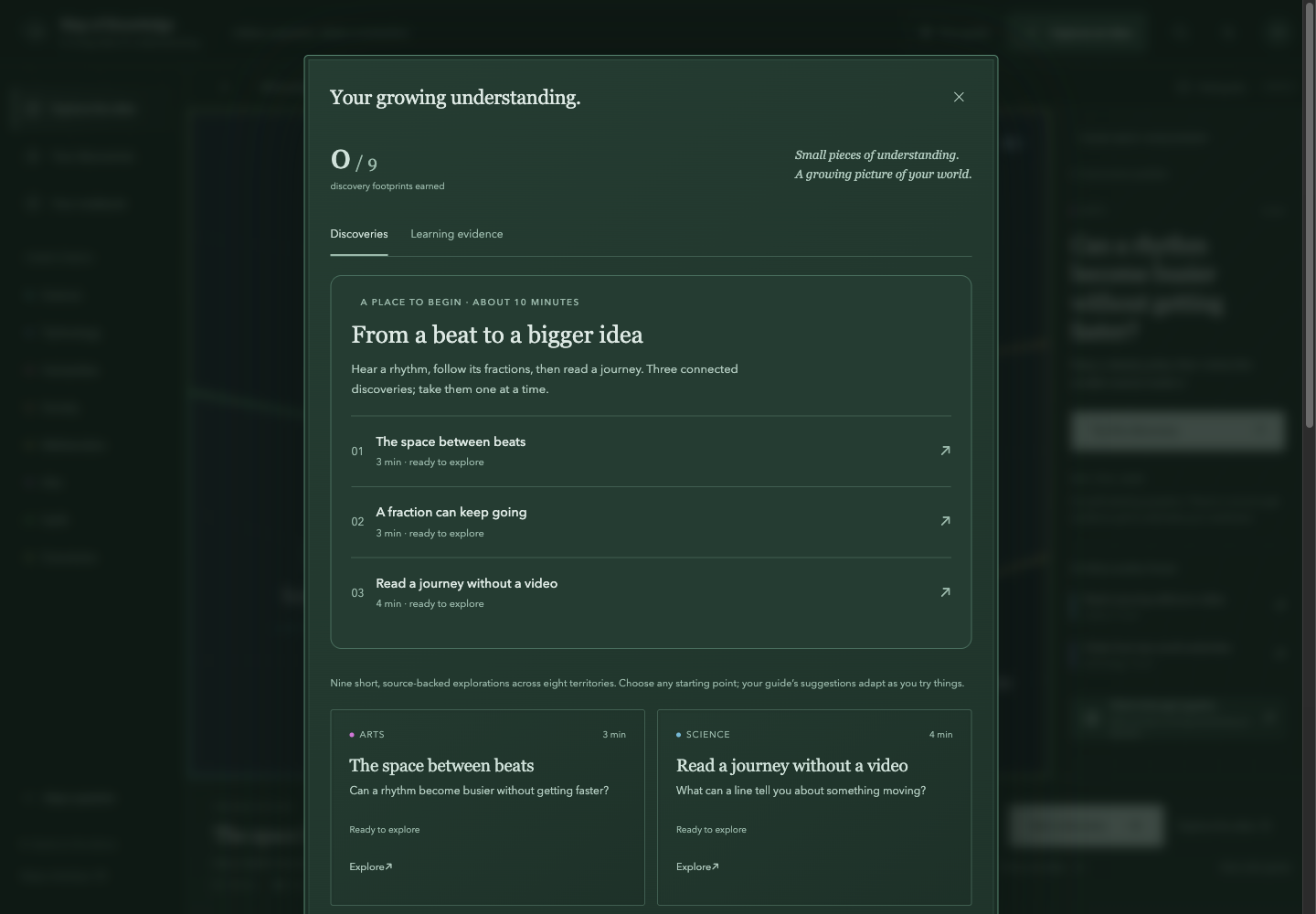
A starter trail
Three connected discoveries to get you going.
Why I made it
Map of Knowledge turns learning into exploring a map. Subjects are regions, smaller ideas sit inside them, and you can keep zooming in without losing track of where you are.
In my sophomore and junior years of college I was a business economics and psychology double major, before I switched into Miami's Emerging Technology in Business and Design program once I got hooked on tech. I wanted to learn everything: people, software, health and fitness, history, literature, and whatever else caught my attention. I wanted one place to spend an afternoon on whatever I was curious about, take notes, and have it all land somewhere that made sense.
Then I found Domain of Science's maps of math and computer science, and a video that mapped all of knowledge as one big ring. That intro graphic stuck with me. What if it were a game, where each area fills in with color as you learn it, from the big picture all the way down to a single idea?
I've rebuilt it as a globe, a constellation and a learning game. Each time I was chasing a view where you can see all of knowledge at once, drill down anywhere, and watch your progress color in from the bottom up. The atlas is the first version that feels intuitive.
Right now it's a weekend project I use myself, and I keep adding to it.
The choices behind it
01
Give ideas a stable home
The map stays the same as you zoom, so a topic is somewhere you can find again, with related ideas nearby.
02
Measuring what you actually learned
This is the hardest problem, and I haven't solved it. For now, a place on the map only colors in when you work through a fresh example on your own. Opening a page doesn't count, and the AI guide can't mark anything as learned for you.
03
Build three versions, keep one
I build big features as competing versions side by side. For the library, AI agents built three takes at once, a list, an index and a mosaic, each in its own copy of the code. I compared them and kept the best. For content, separate agents write different entries in parallel, and another pass fact-checks them.
04
Free to run
The AI guide runs a local model on my laptop, so it costs nothing. The hosted site keeps it switched off instead of running up a bill.
Every version so far
From the first sketch to the atlas, oldest first.
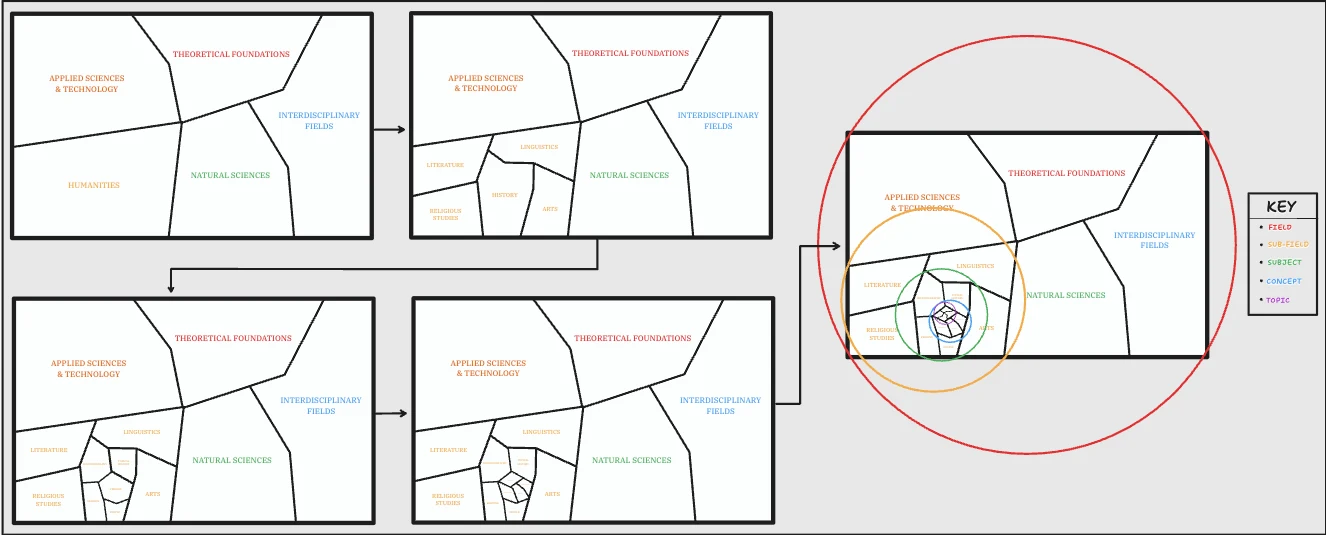
The start · The first sketch
One region inside another, inside another. The goal was already there: go from all of knowledge down to one idea without getting lost.
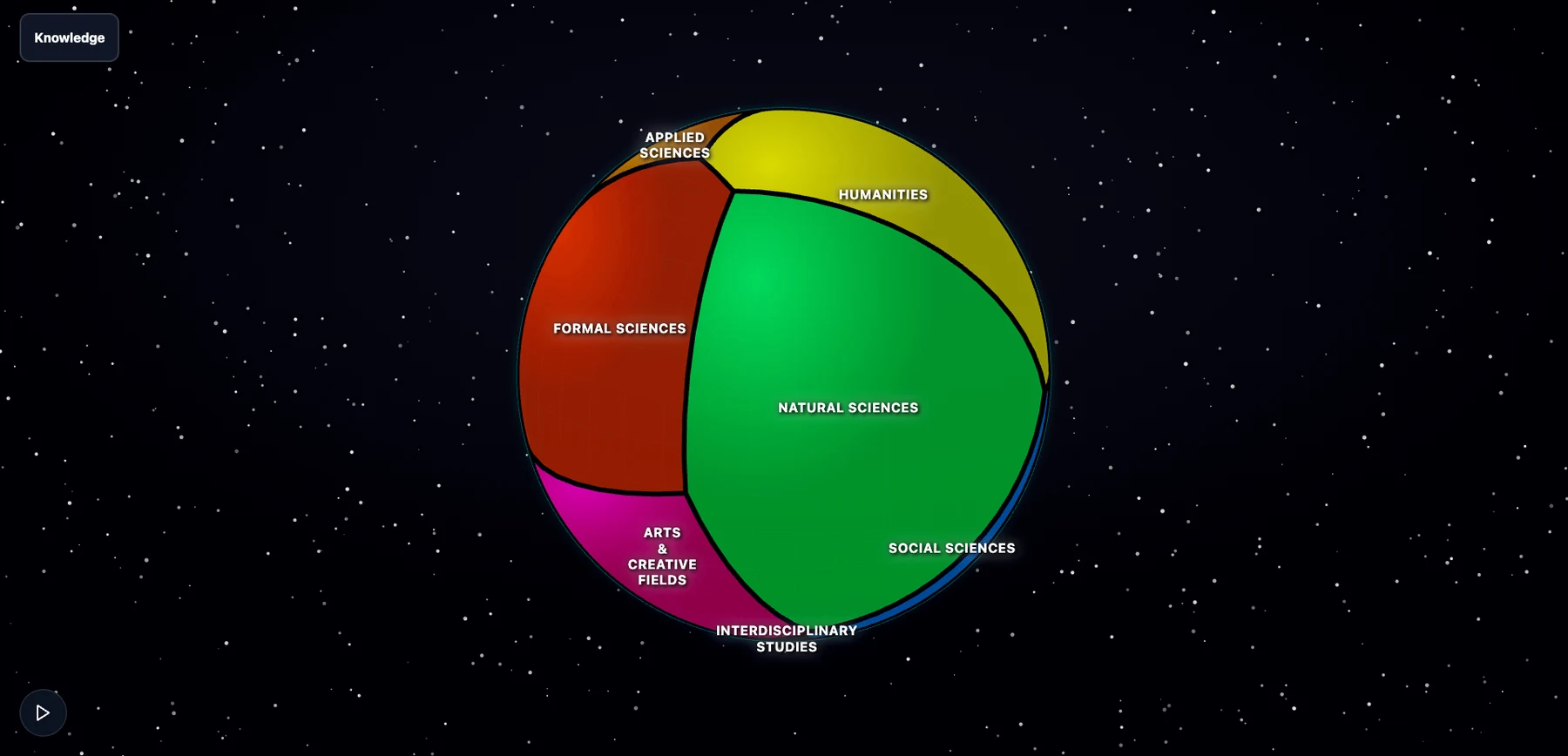
2025 · A globe made of subjects
The first real version put the major fields on a colorful planet. The problem: zoom in far enough and subjects drifted out of the region they belonged to.
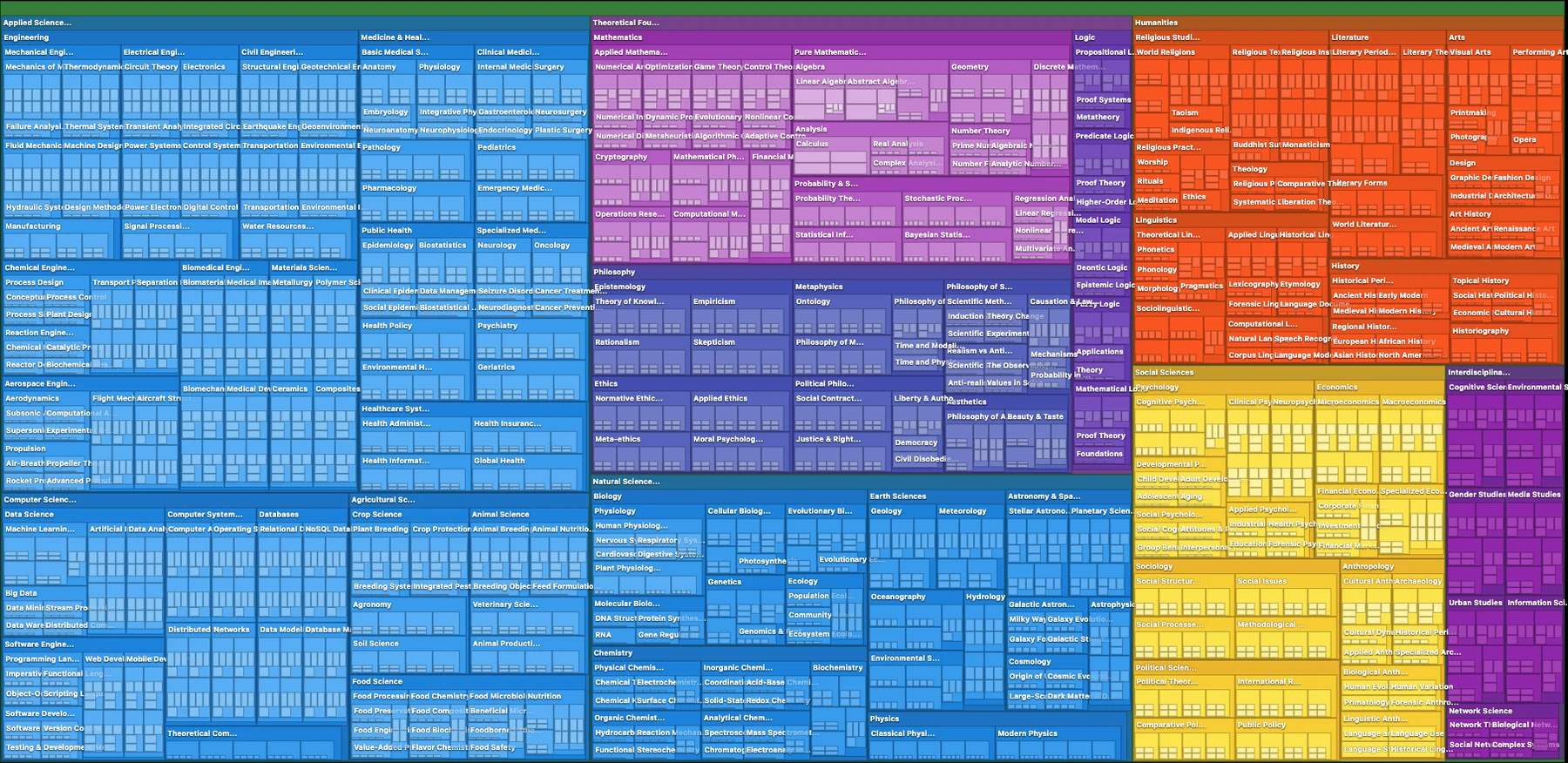
Undated · How much fits on one map?
A treemap showing subjects, fields and subfields all at once. It showed how big the idea is, and how fast it turns into a wall of tiny labels.
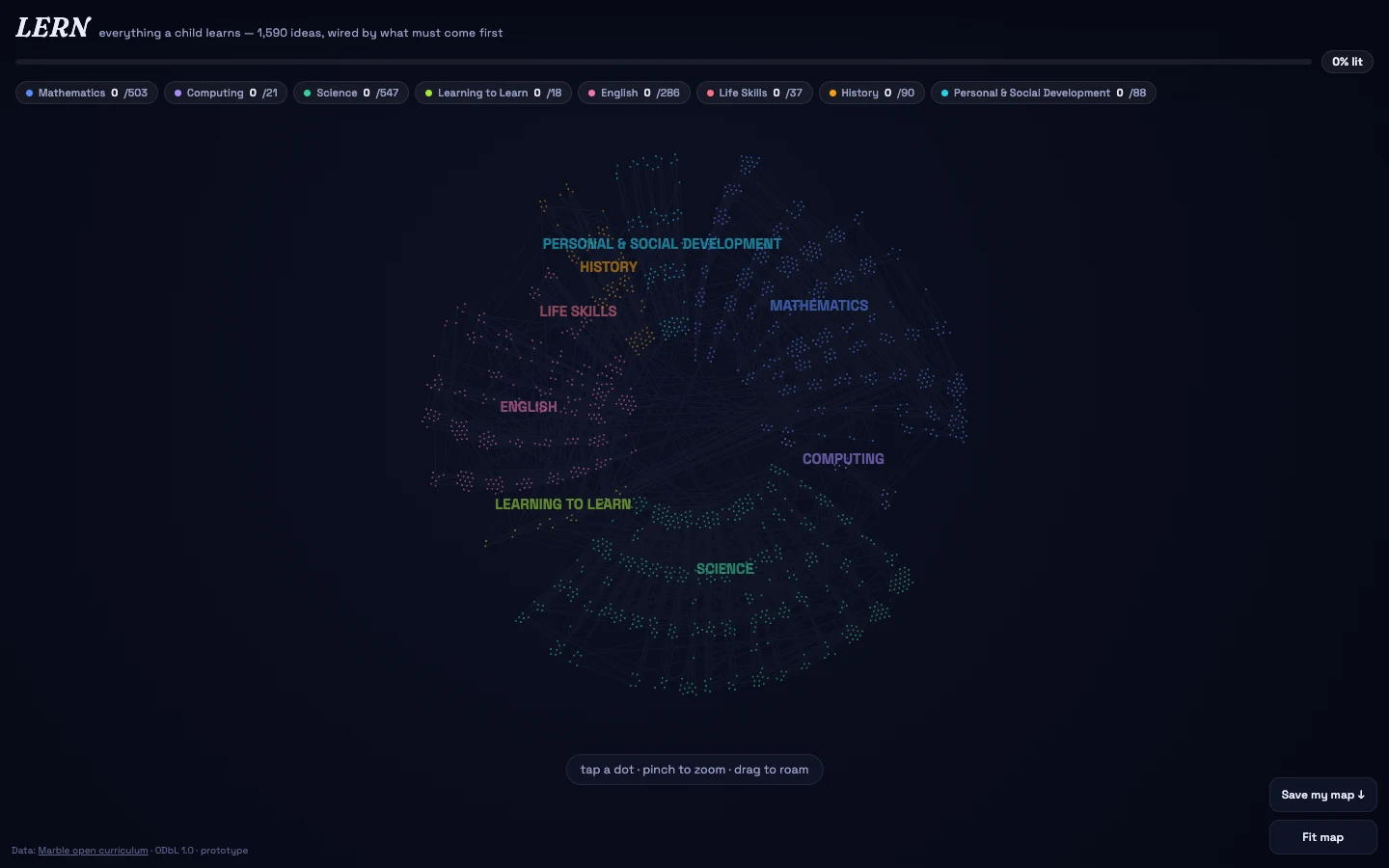
July 2026 · LERN: knowledge as a galaxy
A galaxy of about 1,600 topics, connected by what you need to know first. Learn anywhere, mark what you know, and watch it light up.
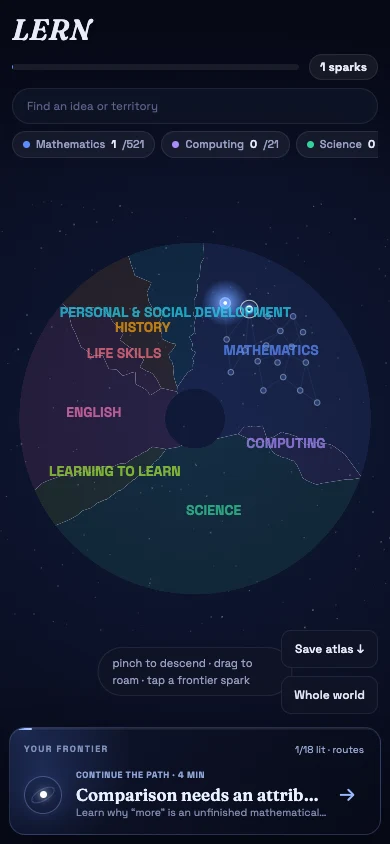
July 2026 · From tracking to learning
The next version added a learning path: an 18-step math journey where each lesson and challenge lit up a spot on the map.
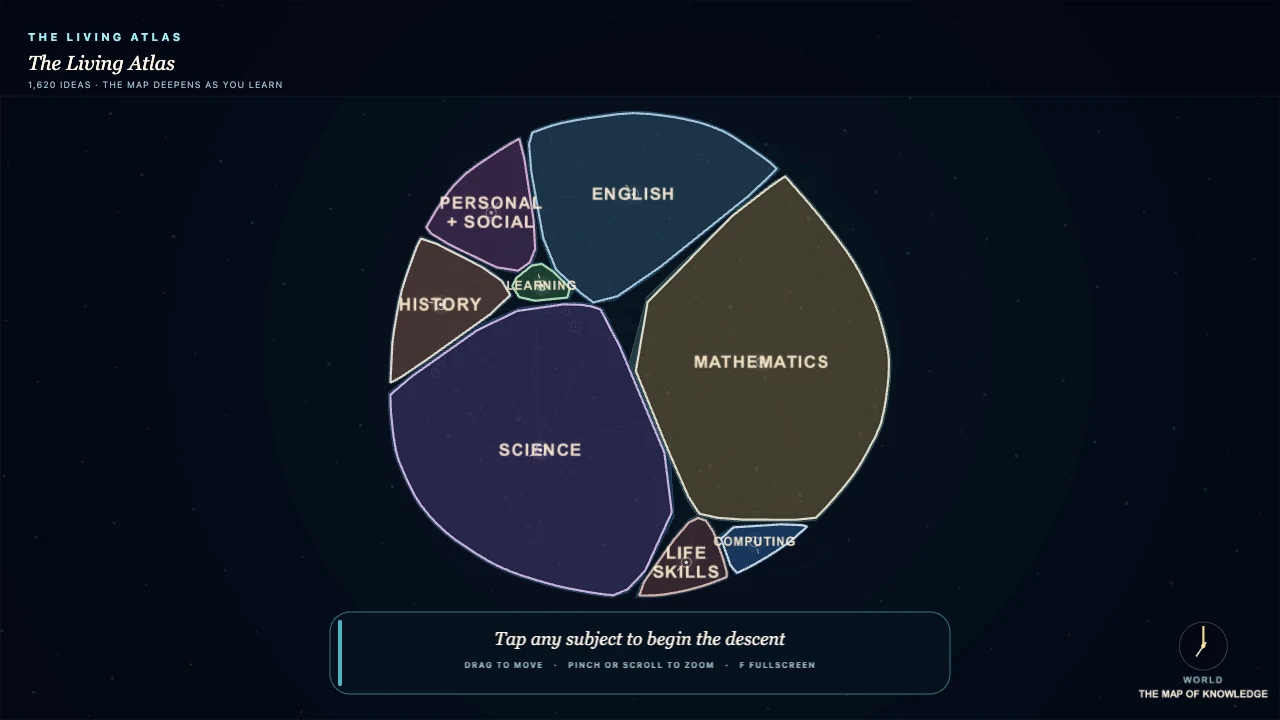
July 2026 · The Living Atlas game
A game version with hands-on activities: build, move, simulate and explain to earn a lasting light on the map.
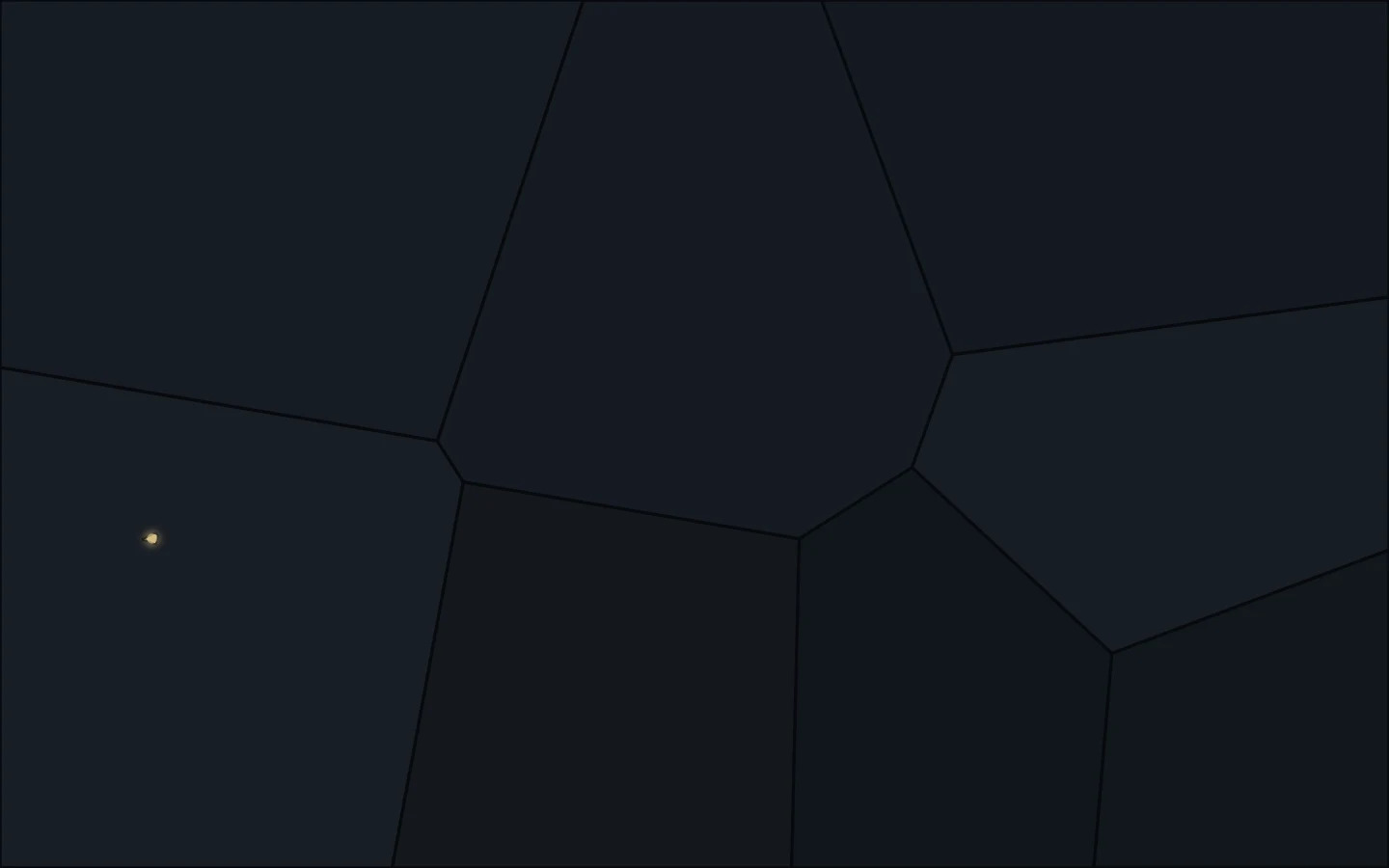
August 2026 · Back to the map
I cut it back to the core idea: one map you can zoom into forever, where finishing something deep leaves a tiny gold mark you can still see from the top.
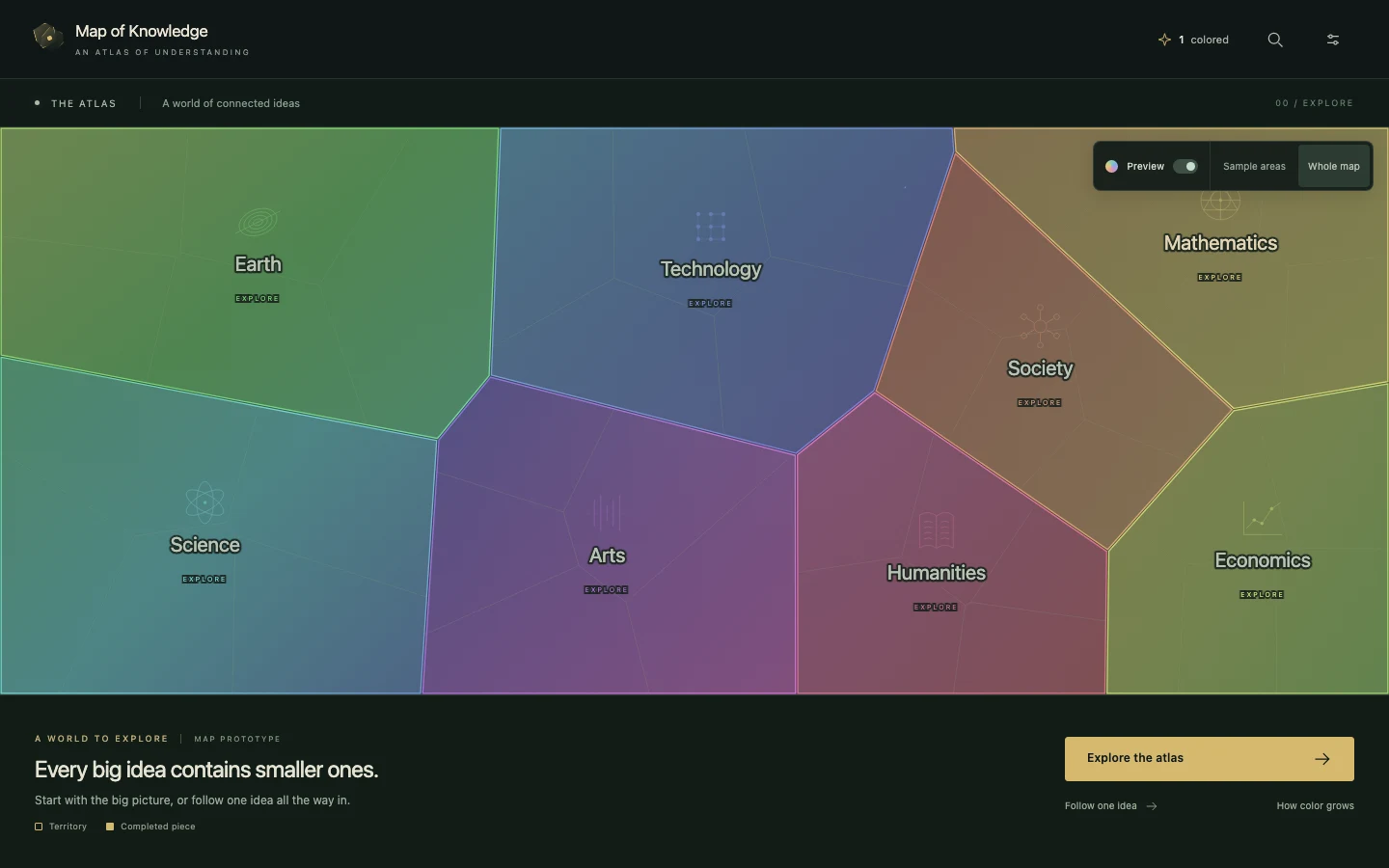
September 2026 · The atlas feels like a place
Real subjects came back, with colored borders, intros at every level and smooth zooming between them. This is the version that became the live atlas.
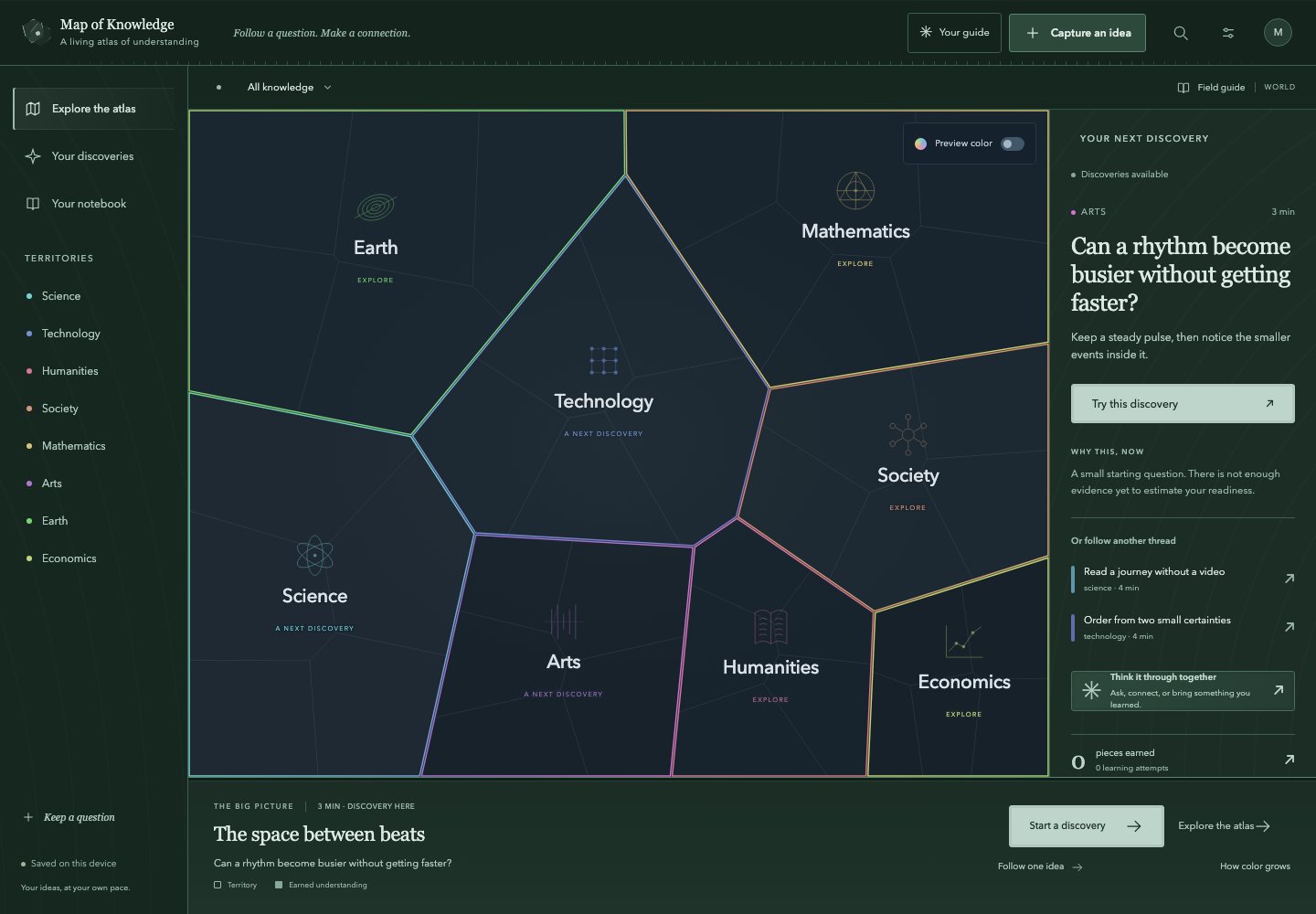
Adaptive Atlas
The September version.
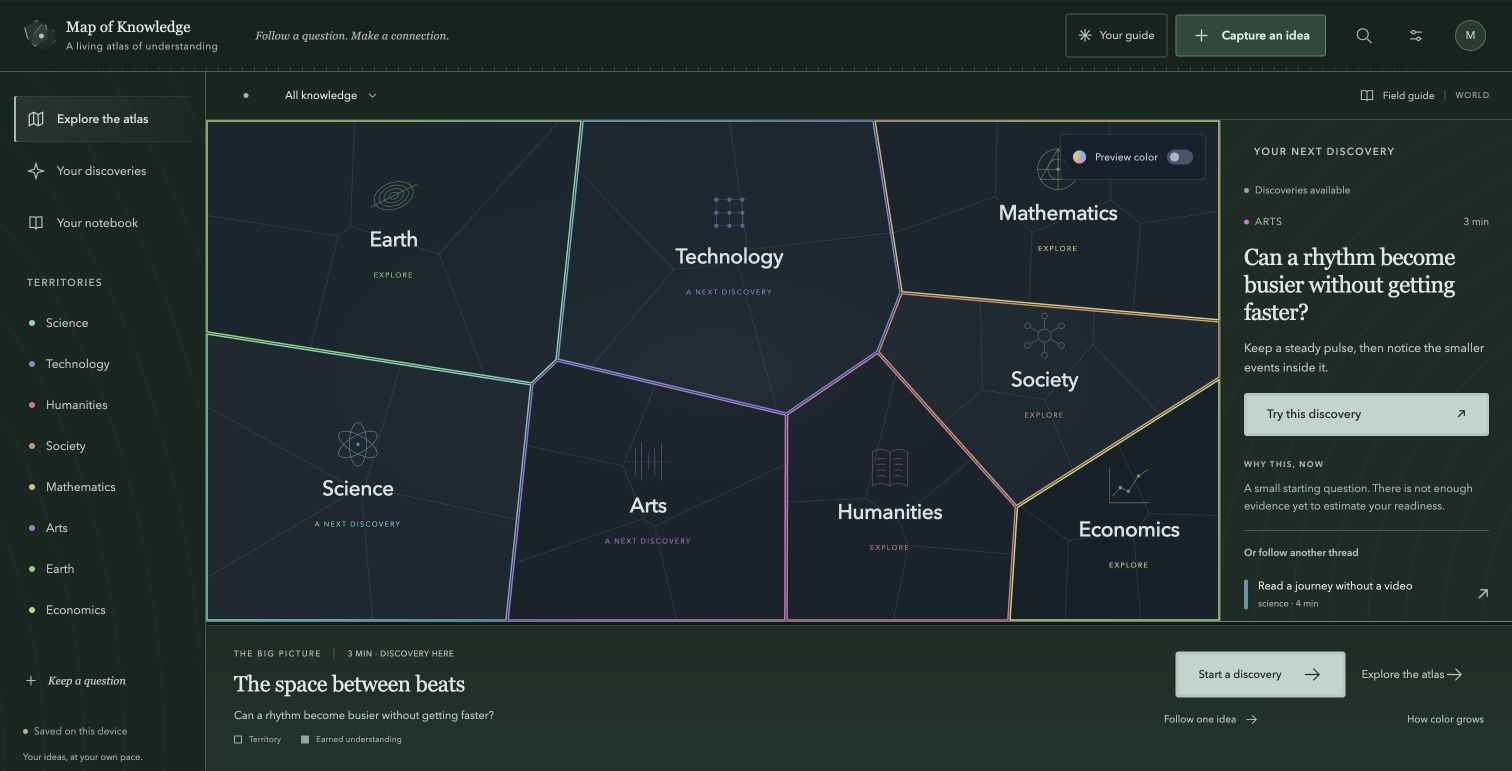
Explore the atlas
The atlas in mid-October.
Connected learning trail
A starter trail of three connected discoveries.
Try a discovery
A discovery about rhythm and fractions.
Earn a piece of understanding
Finishing a discovery.
Keep the connection
Saving a takeaway to the notebook.
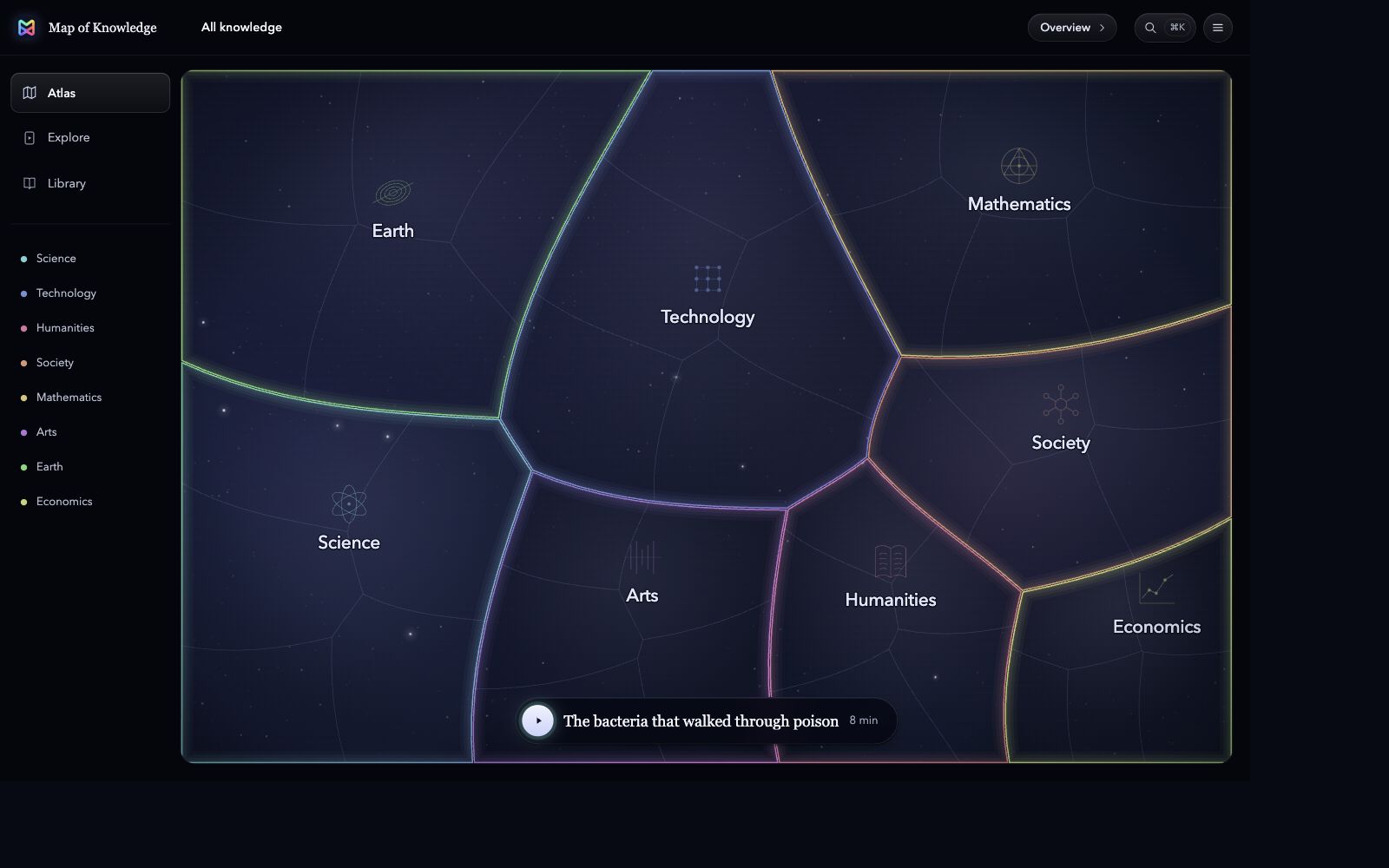
Explore the atlas
The atlas in late October.
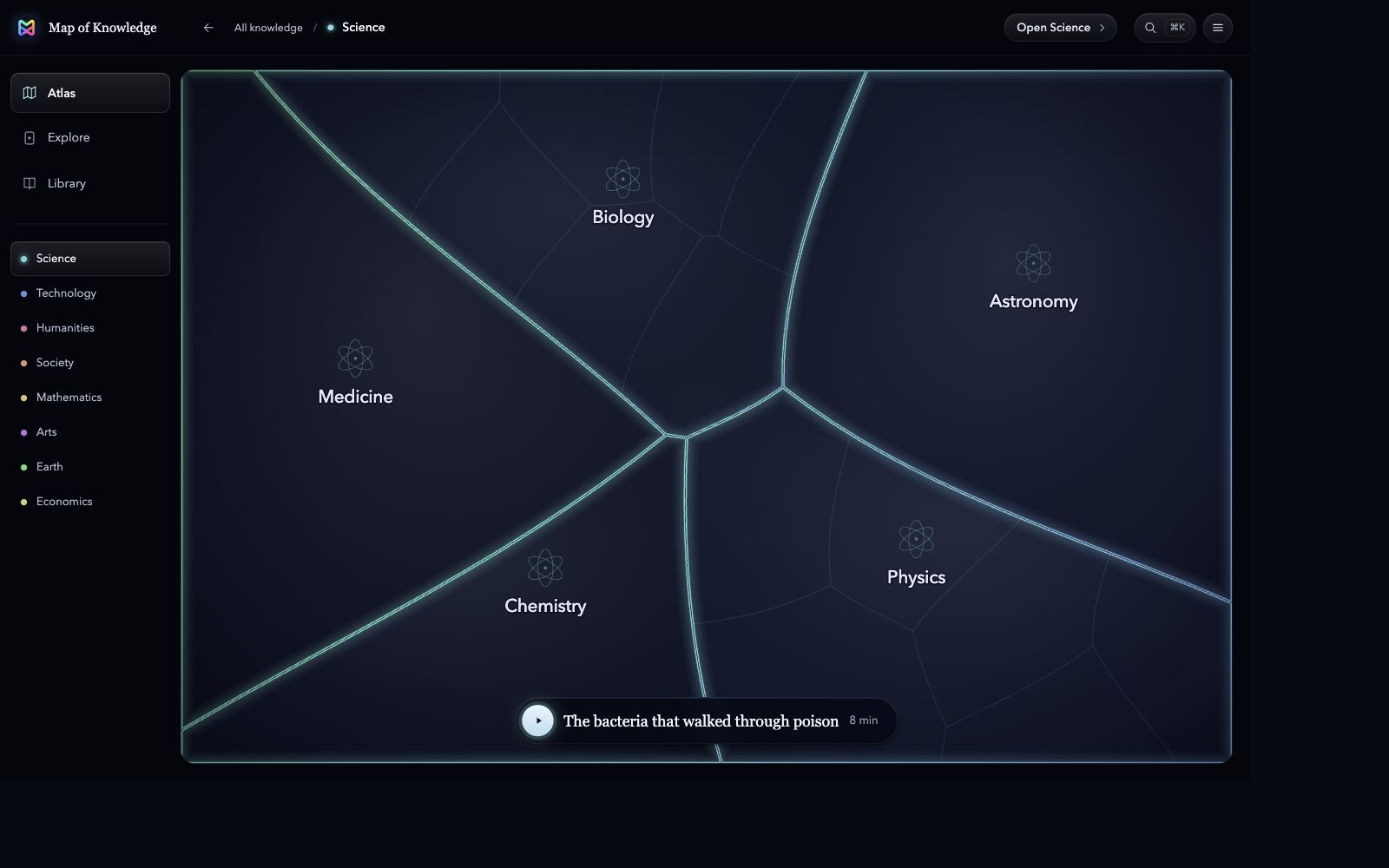
Zoom into Science
Science in late October.
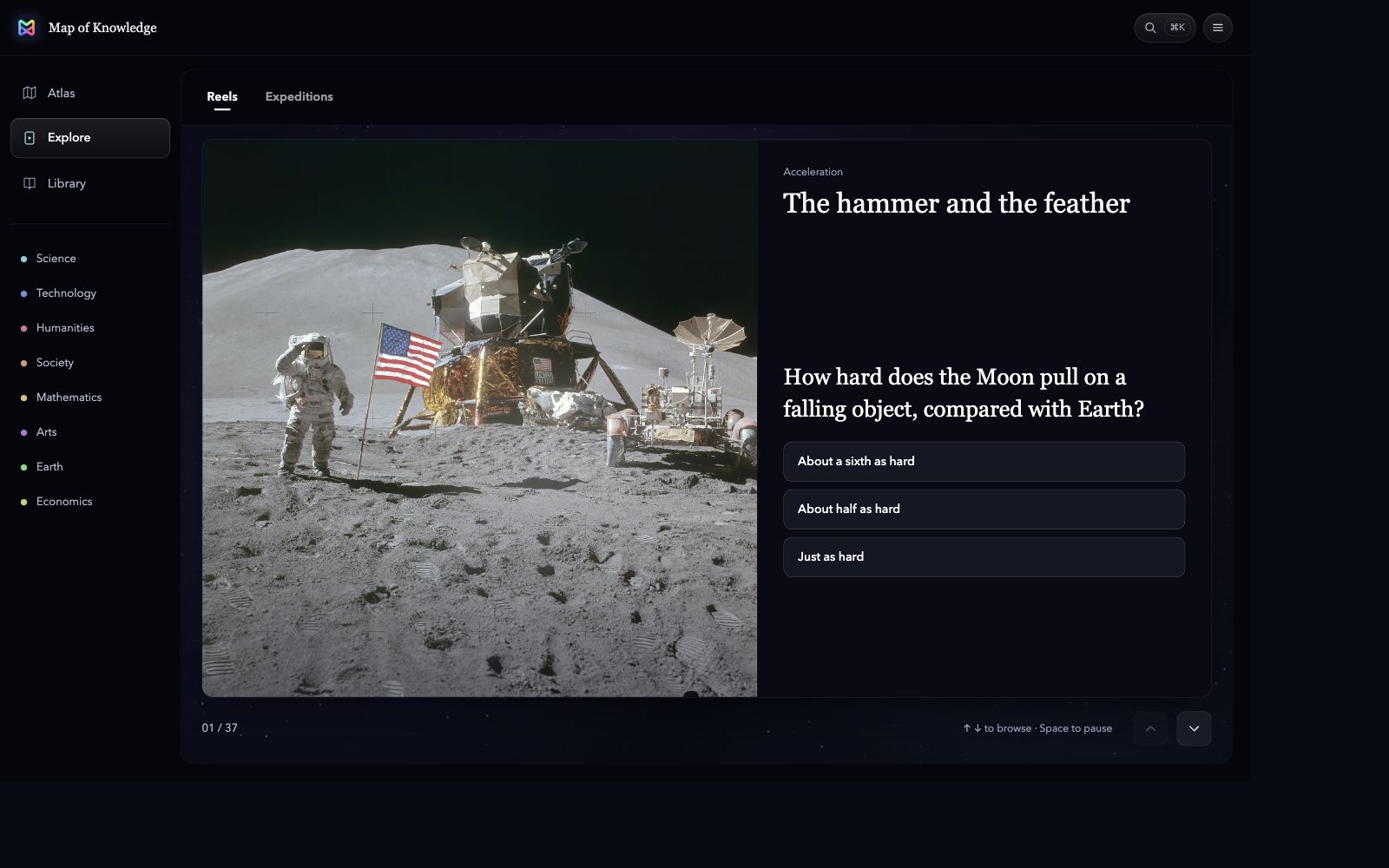
Explore through reels
An earlier Explore view.
Predict an outcome
A discovery asks you to predict what happens.
Your learning library
An early version of the library.
What’s inside
Also inside
- Nine hands-on discoveries
- A local AI guide
- Pick up where you left off
Progress
- 2025First version as a globe
A 3D globe with subjects, quizzes and progress tracking.
- Aug 2026Zoomable atlas prototype
Rebuilt the idea as a map you can zoom into forever, with smooth camera moves between levels.
- Sep 2026Eight-region atlas goes live
Shipped the atlas with eight subjects, then added a notebook and nine hands-on discoveries.
- Oct 2026Genetics lessons and video feed
Added lessons on DNA, meiosis and inheritance, plus a short-video feed tied to the map.
- NowLibrary and map redesign
Trying out a personal library for saved videos and lessons, and a bolder look for the map itself.
- NextTest a real learning habit
Use it over several days with real questions and see what actually helps things stick.
Known gaps
Your progress and notes are saved in your browser only, with no accounts yet. The AI guide runs on my laptop, so it's switched off on the live site. Nine discoveries aren't a full curriculum, and I haven't tested whether it actually helps people learn.